Tuesday, October 9, 2012
UGANDA AT 50: The Build-Up To Independence
The cries for Independence which prevailed in most of African colonies following World War II were somewhat muted in Uganda. This was attributed to several factors: the lack of widespread alein settlement, the high degree of African involvement in public affairs prior to independence, the strongly regional character of Uganda's politics, and lastly the strong probability that the status quo rather suited Uganda's Protestant Baganda elite.
The First Anti-Colonial Political Party: Uganda's first anti-colonial political party, the Uganda National Congress (UNC), was founded as late as 1952 and it took some years before it gained marked support, especially in parts of the underdeveloped North.
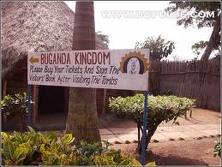
First Call For Independence: The first serious call for independence came from the most unlikely sources. Kabaka Mutesa II (head of the Buganda kingdom) made the first call for Independence. In 1953, Mutesa defied the British administration by opposing the mooted federation of Uganda with Kenya and Tanzania. The then Governor of Uganda refused to give Mutesa ang gurantees regarding federation, but Mutesa insisted atleast Buganda - alone - be granted Independence. Mutesa was declared to be disloyal to Britain, was deposed from the throne and exiled to Britain. This won immense support for Mutesa, not only in his kingdom Buganda, but as a National Hero. This was evident when he returned to his palace in 1955. On 18 October 1955, a Buganda Agreement was signed, giving the Kabaka and his government greater federal powers. This created mild alarms from non-Baganda.
Democratic Party (DP): Uganda's first indigenous political party of consquence was founded in 1956 by Matayo Mugwanya, after Mutesa rejected him as candidate for the Prime Minister of Buganda Kingdom on th grounds of his Catholicism. Therefore this party was formed on a platform for the legitimate grievances of Catholics, who had always been treated as Second-Class citizens og Uganda. In 1968, the Democratic Party rose to prominence when the party leadership was handed to Benedicto Kiwanuka, a lawyer.
Formation of the Uganda People's Union (UPU): In the wake of the 1958 elections, the Uganda People's Union was founded. This was the first public alliance of non-Buganda leaders, and this represented an important step in the polarisation of Ugandan politics.
Milton Obote's UPC: The Ugandan National Congress split in 1959 and this was along ethnic lines. The non-Baganda faction of UNC combined with UPU to form th Uganda People's Congress (UPC) and this was led by Milton Obote.
Kabaka Yekka (KY)- "Kabaka Forever": In 1961, the Baganda element of UNC combined with members of the Buganda government to form KY, an overtly pro-Protestant and pro-Buganda political party. This was nicknamed "Kill Yourselves" by its opponents.
1961 General Elections: In the 1961 elections, the main contenders were the DP, UPC and KY. The DP won. Benedicto Kiwanuka thus became the first Prime Minister of Uganda when self-government was granted on 1 March 1962.
1962 Elections: In April 1962, another general election was held. This bagun the process and build-up to granting of full Independence to Uganda. In this election, the UPC and KY formed an unlikely coalition, as a result of DP's success in the elections a year before. The UPC won 43 seats, DP won 24 seats and the KY won 23 seats, giving the UPC-KY alliance a clear majority. This allowed Milton Obote of UPC to lead Uganda to independence on 9 October 1962.
God Bless Uganda and its People.
Proud to Be Ugandan
Labels:
9th October 1962,
uganda,
Uganda At 50,
Uganda's History
Wednesday, May 16, 2012
Know Uganda: Bwindi
As a guest of Ruhija Gorilla Lodge, a classy offering in Bwindi Impenetrable Forest National Park, I set out with my partner to this jewel of the jungle.
Dark and chilly as it may be, once it rains and the clouds are driven away, Bwindi has an excellent view of the sunset. The chalets/cabins at Ruhija Gorilla Lodge are built in such a way that you have a nice view of the sun setting over Buhoma and Lake Edward in Kanungu.
Perched on the eastern side of the park is this serene lodge with a green roofing overlooking the thick forest cover of Bwindi forest. Further beyond the forest is Queen Elizabeth National Park near Lake Edward. At this point you can even catch a glimpse of the hills of D.R Congo.
Nippy air
Here at Ruhija Lodge, the sun rises at midday. But that still would find you fully clothed. It can be extremely cold to as low as 12 degrees centigrade. What is more, on one ridge it can be shining and just across from it, rain heavily pouring while on another ridge, farmers are busy swinging their hoes into the air and sinking them deep into the fertile soils.
The name Bwindi means darkness. It can be extremely dark even during the day that you may not see far. It is dangerously chilly that you would not risk an asthmatic person for company.
From nowhere, you can be engulfed in a fog of clouds as they caress you with tiny misty drops and for the hairy skinned, you may be covered in a sheath of white flakes.
However, the lodge maintains a constant flow of hot beverages. And every meal is preceded with simmering onion, oregano or chicken soup; be it dinner or lunch. And if you have travelled alone, the lodge offers you at least two hot water bottles.
Breathtaking sunset
Dark and chilly as it may be, once it rains and the clouds are driven away, Bwindi has an excellent view of the sunset. The chalets/cabins at Ruhija Gorilla Lodge are built in such a way that you have a nice view of the sun setting over Buhoma and Lake Edward in Kanungu.
It was the most amazing gift for us. But you have to be careful, otherwise, you may miss it. In typical Kikiga, they call it akarenga bazaana, an orange glow of the sun with its rays lashing out at the dark forest of Bwindi.
This splendid glow allows you to take in the four-breasted hills of Muhabura, Mgahinga, Simbinyo and Virunga mountains, which lie lazily and invitingly beyond the Bwindi Forest. And this can all be taken in while seated at the balcony of the lodge’s restaurant or at the front area of your room. All the rooms overlook the forest cover of Bwindi.
Here, the sun’s setting glow will not last for more than 10 minutes. I call out to my friends whom I had travelled with to capture the glow but by the time they kick the blankets off their tired bodies, after a hectic gorilla trekking expedition, the glow of the sun is gone.
The glow is replaced with a crater-like scenery. Note that there are no crater lakes in view at this point of Ruhija. The clouds just form white lake-like features in between the valleys and for a moment you may mistake them for real lakes. And these come just moments before darkness, again, engulfs the hills and valleys of Bwindi.
Accommodation
Management knows how cold Bwindi can get. The toilet seats have a wooden covering. With that degree of coldness, you may not do yourself any justice to answer nature’s call on a very cold toilet seat.
The beddings are snow white but there is a shed of brown all around you because of the wooden walls. And the towels; yes, the towels are not thin as they are wont in most hotels in Uganda. You can also be sure; Ruhija Gorilla Lodge offers you warm water all the time.
The heating system is directly connected to the cooking area. As long as there is cooking going on, you will have hot water in your showers. And cooking goes on all the time. The rooms are highly recommended by the Tourism Minister, the amiable Prof Ephraim Kamuntu. He has spent a night here and this lodge also hosted the Inter Parliamentary Union delegates from Switzerland.
The park is popular for gorilla tracking and this is something you can indulge in. Other than that, you can do some bird watching. There are over 240 bird species in and around Bwindi, including the blue turaco that has been sighted in Ruhija.
Ruhija can be deathly quiet save for the whirling wind that blows from across the forest. Despite this, the haven that is the lodge is testament that while Bwindi is impenetrable, it is habitable.
Bwindi at a glance
Bwindi Impenetrable National Park, covering 32,092 hectares, is one of the largest areas in East Africa which still has lowland forest extending to well within the montane forest belt.
Located on the eastern edge of the Albertine Rift Valley and the property is a biodiversity hotspot with possibly the greatest number of tree species for its altitude in East Africa. It is also host to a rich fauna including a number of unique butterflies and one of the richest collection of mammals in Africa.
Labels:
accomodation in uganda,
africa,
bwindi,
east africa,
national parks in uganda,
tourism,
travel,
uganda
Wednesday, March 21, 2012
COMMUNICATION IN UGANDA-LUGANDA
Hello Traveler,
Although 33 local languages are spoken in Uganda, the official language is English, spoken widely by most urban Ugandans, and certainly by anybody with more than a moderate education level. It isn’t uncommon to come across Ugandans from different parts using English to communicate, and most English-speaking visitors to the country will have no problem getting around.
Of the indigenous languages, the most widely spoken is Luganda, which to some extent serves as a lingua franca for the uneducated you come across in the country, mainly in Kampala. So, too, does Swahili (more commonly known as Kiswahili), a Bantu language that is no more indigenous to Uganda than is English.
Luganda is the first language of Baganda, which I am personally a Muganda, singular for someome from Buganda and it is the most widely spoken of the languages indigenous in Uganda. Some of the words and phrases that can be useful to you in Luganda are as follows:
Greetings
Luganda phrase | English meaning |
Oli otya? | How are you? |
Gyendi | I am OK |
Siba bulungi | Have a nice day |
Sula bulungi | Good night |
Weraba | Farewell |
Tunalabagana | See you later |
Webale (nyo) | Thank you (very much) |
Nsonyiwa | Am sorry |
Ssebo | Sir |
Nyabo | Madam |
Mwami | Mr. |
Mukyala | Mrs. |
Jangu wano | Come here. |
Useful phrases
Luganda phrase | English meaning | |
Ova mukitundu ki? | Where are you from? | |
Nva mu England | I am from England | |
Ovude wa? | Where have you come from? | |
Nvude Kamapala | I have come from Kampala. | |
Ogenda wa? | Where are you going? | |
Ngenda Jinja | I am going to Jinja. | |
Eno baasi egenda wa? | Where is this bus heading to? | |
Eno baasi egenda Kabale. | This bus is heading to Kabale. | |
Amanya gwo gw’ani? | What is your name? | |
Nze Ronald | My name is Ronald. | |
Kiriwa? | Where is it? | |
Kiri wala? | Is it far? | |
Kiri kumpi? | Is it near? | |
Olugundo lwe Kampala luliwa? | Where is the road to Kampala? | |
Sente meka? | How much does it cost? | |
Njagala room | I want a room. | |
Olinayo ko…? | Do you have any….? | |
Kino kiyitibwa kitya? | What is this called? | |
Oyogera oluzungu? | Do you speak English? | |
Eno taxi eraga wa? | Where is this taxi heading to? | |
Pronunciation is very similar to Swahili. A detailed phrasebook and dictionary can be viewed online at www.buganda.com.
If you want to learn Luganda, you can hire a private tutor or take classes usually organised by language teaching institutes in Kampala.
Saturday, November 12, 2011
WHERE TO STAY WHEN IN UGANDA
Hello Fellow Traveler,
Before you travel to Uganda for your Trip, you have to plan it adequately which includes booking your Air ticket, accomodation, what to take for health and safety and also any other neccessary requirements for your trip. Whenever you travel to Uganda and whatever your budget, you will find suitable accomodation for yourself. Most towns have a good variety of moderately priced and budget hotels, even in the smallest village you will find where to stay for a dollar or so.
In Uganda, you can find these kinds of accomodation whereever you will be in the country:
Before you travel to Uganda for your Trip, you have to plan it adequately which includes booking your Air ticket, accomodation, what to take for health and safety and also any other neccessary requirements for your trip. Whenever you travel to Uganda and whatever your budget, you will find suitable accomodation for yourself. Most towns have a good variety of moderately priced and budget hotels, even in the smallest village you will find where to stay for a dollar or so.
In Uganda, you can find these kinds of accomodation whereever you will be in the country:
- Upmarket Accomodation: This is only available in major towns and tourist centres. This category includes hotels, lodges and resorts accored a two- to five-star ranking internationally. They cater for intenational leisure and modern accomodation with en-suite facilities. This is the category to look at if cost isn't an issue to you but all you want is standard accomodation you would expect at home.
- Moderate Accomodation: This category embraces those hotels that can't be classified as Upmarket, for one reason or other, but are also expensive, decent and of standard. Mainly they are superior local hotels that charge considerably lower rates than Upmarket competitors. This is the category to look at if you are travelling on a limited but not on low budget though don't expect a luxurious standard of accomodation.
- Budget Accomodation: This category embraces hotels generally aimed at the local market, though usually clean and comfortable, a decent restuarant attached and English-speaking staff. This is the category to look at if you are on a limited budget travel.
- Shoestring Accomodation: This category embraces a small number of establishments aimed specifically at backpackers and mainly consists of local guesthouses. Guesthouse standards tend to vary widely both within towns and between management, but prices are more of the smae. This category is suitable for travelers who want cheap accomodation, irrespective of quality.
- House Shortstays: This category mainly embraces residential homes or apartments strictly meant for shortstay travelers. They are nice homes in the city subburbs at moderately lower prices per month. Accomodation is available on a timely booking before you land in the country through travel agents locally.
Labels:
accomodation in uganda,
east africa,
tourism,
travel,
uganda
Friday, October 7, 2011
KIDEPO VALLEY NATIONAL PARK
Hello Traveler,
When in Uganda, you think about which national parks to visit and have a glimpse of Uganda's gift of nature, then Kidepo Valley National Park shouldn't miss on your list.
Kidepo lies in the far northeast of Uganda, isolated from the rest of the country by the arid badlands of Karamoja. It's one of the most alluring tourist destinations in Uganda, but seldom visited due to the cost and difficulty of getting there. It has a rugged mountain view, good atmosphere, game viewing and birdwatching.
It covers an area of about 1,442 square kilometers and its highest point, Mt. Morungole rises on the border. The dominant habitat is open wooded savanna. Kidepo protects about 86 mammal species, with the bird checklist at 463 species confirmed and 26 species unconfirmed and a variety of butterfly species and other small creatures.
When you visit Kidepo, you can record a minimum of about five primate species, with 20 predators, like the bat-eared fox, black-backed jackal, aardwolf, cheetah, side-stripped jackal, spotted hyena, leopard, lion, mongooses and a few other rare species in Uganda's national parks. You also have a chance to at least see some of its 12 antelope species, which include: the greater kudu, the lesser kudu, Guenther's dik-dok, mountain reedbuck (seen nowhere else in Uganda), eland, common duiker, klipspringer, oribi, defasa waterbuck, bushbuck and bohor redbuck. Elephants, Burchell's zebra, warthog, bushpig and buffaloes are also seen in Kidepo.
You can also think of birdwatching, with Kidepo's relatively small size, as many as 100 bird species of Uganda's bird species are found there. The bird specials include, the common ostrich, red-throated bee-eaters, black-breasted barbets, northen brownbul, golden pipit, chestnut weaver, carmine, kori bustard -to name but only a few of the more visible species.
GETTING THERE:
Due to the small portion of tourists visiting Kidepo, safari from Kampala can be arranged through local operators in Kampala.
When in Uganda, you think about which national parks to visit and have a glimpse of Uganda's gift of nature, then Kidepo Valley National Park shouldn't miss on your list.
![]() |
| Location of Kidepo Valley on Uganda's map. |
Kidepo lies in the far northeast of Uganda, isolated from the rest of the country by the arid badlands of Karamoja. It's one of the most alluring tourist destinations in Uganda, but seldom visited due to the cost and difficulty of getting there. It has a rugged mountain view, good atmosphere, game viewing and birdwatching.
It covers an area of about 1,442 square kilometers and its highest point, Mt. Morungole rises on the border. The dominant habitat is open wooded savanna. Kidepo protects about 86 mammal species, with the bird checklist at 463 species confirmed and 26 species unconfirmed and a variety of butterfly species and other small creatures.
When you visit Kidepo, you can record a minimum of about five primate species, with 20 predators, like the bat-eared fox, black-backed jackal, aardwolf, cheetah, side-stripped jackal, spotted hyena, leopard, lion, mongooses and a few other rare species in Uganda's national parks. You also have a chance to at least see some of its 12 antelope species, which include: the greater kudu, the lesser kudu, Guenther's dik-dok, mountain reedbuck (seen nowhere else in Uganda), eland, common duiker, klipspringer, oribi, defasa waterbuck, bushbuck and bohor redbuck. Elephants, Burchell's zebra, warthog, bushpig and buffaloes are also seen in Kidepo.
You can also think of birdwatching, with Kidepo's relatively small size, as many as 100 bird species of Uganda's bird species are found there. The bird specials include, the common ostrich, red-throated bee-eaters, black-breasted barbets, northen brownbul, golden pipit, chestnut weaver, carmine, kori bustard -to name but only a few of the more visible species.
GETTING THERE:
Due to the small portion of tourists visiting Kidepo, safari from Kampala can be arranged through local operators in Kampala.
Monday, September 12, 2011
BIRD WATCHING IN UGANDA
Hello Traveler,
When you come to Uganda, Bird watching, like Gorilla tracking shouldn't miss on your things To Do list for your trip in the Pearl of Africa.
Uganda is arguably the most attractive country in Africa to Bird Watchers, not only because of the unusually high number of bird species- about 1008 species recorded in the area within its borders, but also because it offers easy access to several bird-rich habitats that are difficult to reach elsewhere.
Uganda has roughly 10% of the regional checklist of bird species: seven of the 20 Hornbill species, five of the 14 Honeyguides, seven out of the 21 Woodpeckers, 11 out of the 36 Bulbuls and greenbuls, 11 Warblers, ten Fly catchers, eight Sunbirds, eight Weavers, eight Finches, four Tinkerbirds, four Pigeons or doves, three Kingfishers, three Sparrowhawks, three Cuckoos and three Nightjars.
The rainforests of Western Uganda must be seen as the country's most important bird habitat, one of the greatest interest to birdwatchers, particularly if you are already familiar with East African birds. Semilki is the most alluring forest in terms of localised species, closely rivalled by Budungo, Kibale and Bwindi Impenetrable forests. Though ever the relatively tame Entebbe botanical garden has several interesting bird species.
If you want to see a wide range of Ugandan birds, try to visit Lake Mburo, Queen Elizabeth NP, Murchison Falls NP and Kidepo Np.
Here is a beginner's list:
2. Pelicans, charismatic water-birds on open lakes and mainly at Kazinga Channel, Queen Elizabeth National Park.
3. Goliath Heron, a 1.5 meter tall immense heron commonly seen from launch trips in Murchison Falls.
4. Flamingos, pink-white algae eaters in large concentrations in Katwe and Flamingo crater lakes in Queen Elizabeth and Chambura Wildlife Reserve.
5. Silverbird, striking silver-backed flycatcher, seen perching openly in Murcchison Falls.
6. Piping Hornbill, common only in Semilki NP and also in Budongo NP.
When you come to Uganda, Bird watching, like Gorilla tracking shouldn't miss on your things To Do list for your trip in the Pearl of Africa.
Uganda is arguably the most attractive country in Africa to Bird Watchers, not only because of the unusually high number of bird species- about 1008 species recorded in the area within its borders, but also because it offers easy access to several bird-rich habitats that are difficult to reach elsewhere.
Uganda has roughly 10% of the regional checklist of bird species: seven of the 20 Hornbill species, five of the 14 Honeyguides, seven out of the 21 Woodpeckers, 11 out of the 36 Bulbuls and greenbuls, 11 Warblers, ten Fly catchers, eight Sunbirds, eight Weavers, eight Finches, four Tinkerbirds, four Pigeons or doves, three Kingfishers, three Sparrowhawks, three Cuckoos and three Nightjars.
The rainforests of Western Uganda must be seen as the country's most important bird habitat, one of the greatest interest to birdwatchers, particularly if you are already familiar with East African birds. Semilki is the most alluring forest in terms of localised species, closely rivalled by Budungo, Kibale and Bwindi Impenetrable forests. Though ever the relatively tame Entebbe botanical garden has several interesting bird species.
If you want to see a wide range of Ugandan birds, try to visit Lake Mburo, Queen Elizabeth NP, Murchison Falls NP and Kidepo Np.
Here is a beginner's list:
- Common Ostrich, world's largest bird at Kidepo National Park in the far Northeast of Uganda
![]() |
| Common Ostrich. |
![]() | |
| Pelicans at Kazinga Channel. |
3. Goliath Heron, a 1.5 meter tall immense heron commonly seen from launch trips in Murchison Falls.
![]() | ||
| Goliath Heron. |
4. Flamingos, pink-white algae eaters in large concentrations in Katwe and Flamingo crater lakes in Queen Elizabeth and Chambura Wildlife Reserve.
![]() | |
| Flamingos at Lake Katwe. |
5. Silverbird, striking silver-backed flycatcher, seen perching openly in Murcchison Falls.
![]() | |
| Silverbird. |
![]() | |
| Piping Hornbill. |
Labels:
bird watching,
bwindi,
national parks in uganda,
queen elizabeth,
tourism,
uganda
Wednesday, July 27, 2011
MORE LEGIT PAYING "PTC" PAID TO CLICK SITES
Hello Traveler,
I guess we are together on this one, Paid To Click. I have brought in more legit paying sites for to earn money online. With PTC Sites the rule goes,"The more sites you join, the more are your earnings going to increase at the end of it all." I am personally signed to over 20 sites, that can bring me $70 per month on average. Most sites in order to earn more, one has to upgrade their membership. Upgraded members are entitled to many Ads per day and receive a higher pay per Ad viewed than those of free membership, though i don't encourage one to upgrade membership immediately, take your time and study the progress and performance of the site before upgrading!!!!!!
Here are the more sites as promised, for you to freely join and start earning. JUST CLICK ON THE BANNER AND YOU WILL REDIRECTED TO THE SITE.


I guess we are together on this one, Paid To Click. I have brought in more legit paying sites for to earn money online. With PTC Sites the rule goes,"The more sites you join, the more are your earnings going to increase at the end of it all." I am personally signed to over 20 sites, that can bring me $70 per month on average. Most sites in order to earn more, one has to upgrade their membership. Upgraded members are entitled to many Ads per day and receive a higher pay per Ad viewed than those of free membership, though i don't encourage one to upgrade membership immediately, take your time and study the progress and performance of the site before upgrading!!!!!!
Here are the more sites as promised, for you to freely join and start earning. JUST CLICK ON THE BANNER AND YOU WILL REDIRECTED TO THE SITE.
Friday, July 22, 2011
HOW TO EARN MONEY THAT CAN PAY FOR YOUR MINOR TRAVEL EXPENSES AS YOU PLAN FOR YOUR TRIP!!!!!!!
Fellow Travelers,
You know how soliciting for funds to cater for your Travel expenses has never been that easy, like the way we want to go on adventure or vacation. Here is a way you can at least earn a few bucks while you are in the process of planning your trip and these bucks can cater for sundry expenses like car rentals,tickets and your daily life and so much more.
Allow me to introduce to you what is known as PTC Sites, also known as Paid To Click Sites,in the online and Marketing language.
What is PTC??
Paid To Click is an online business model that draws online traffic to from people using the internet or people trying to make money at home by marketing their sites. ABOVE ALL THEY ARE ALL FREE TO JOIN!!!!!PTC Sites simply act as middlemen between Advertisers and Consumers online. The Advertiser pays for showing Ads on the PTC Site, and the PTC Site pays part of the payment to the viewer after viewing the advertisement for a given period of time. These Ads are generally of any information that the advertiser wants to reach out to its consumers and the information can be valuable to you as the paid viewer, on top of earning a few bucks too.
There are only a few legit paying PTC Sites i recommend and they are also hundreds of scam sites which are a waste of time. The List of my recommendations is below, Just Click on the banners and you will be directed to the PTC.

KEEP WATCHING THIS PAGE FOR MORE LINKS.....I do this for only my fellow travelers!!!!!!
You know how soliciting for funds to cater for your Travel expenses has never been that easy, like the way we want to go on adventure or vacation. Here is a way you can at least earn a few bucks while you are in the process of planning your trip and these bucks can cater for sundry expenses like car rentals,tickets and your daily life and so much more.
Allow me to introduce to you what is known as PTC Sites, also known as Paid To Click Sites,in the online and Marketing language.
What is PTC??
Paid To Click is an online business model that draws online traffic to from people using the internet or people trying to make money at home by marketing their sites. ABOVE ALL THEY ARE ALL FREE TO JOIN!!!!!PTC Sites simply act as middlemen between Advertisers and Consumers online. The Advertiser pays for showing Ads on the PTC Site, and the PTC Site pays part of the payment to the viewer after viewing the advertisement for a given period of time. These Ads are generally of any information that the advertiser wants to reach out to its consumers and the information can be valuable to you as the paid viewer, on top of earning a few bucks too.
There are only a few legit paying PTC Sites i recommend and they are also hundreds of scam sites which are a waste of time. The List of my recommendations is below, Just Click on the banners and you will be directed to the PTC.
KEEP WATCHING THIS PAGE FOR MORE LINKS.....I do this for only my fellow travelers!!!!!!
Labels:
paying ptc sites,
ptc sites,
work from home,
work online
Friday, January 21, 2011
KASUBI TOMBS
In 1882, Kabaka Mutesa relocated his palace to Nabulagala Hill, briefly the capital of his father Suuna II some 30 years earlier, and renamed it Kasubi Hill after his birth place some 50 km further east. Mutesa constructed a large hilltop palace called Muziba Azala Mpanga (roughly meaning 'a king is born of a king'), where he died in 1884 following a prolonged illness. As was the custom, Kasubi Hill was abandoned after the king's death-his successor Mwanga established a new capital at Mengo Hill- but rather less conventionally Mutesa was the first kabaka to be buried with his jawbone intact, in a casket built by the Anglican missionary Alexander Mackay. In a further break with tradition, Kasubi rather than Mengo was chosen as the burial palce of Kabaka Mwanga in 1910, seven years after his death in exile. It also houses the tombs of his successor Daudi Chwa II, who ruled from 1897 to 1939, and of Edward Mutesa II, whose body was returned to Uganda in 1971, two years his death in exile.
The tombs are housed within the original palace built by Mutesa, a fantastic domed structure of poles, reeds and thatch, which- aside from the addition of a concrete base and sliding glass doors in 1938- has changed little in appearance over the intervening 130 years. The former palace contains a fascinating collection of royal artifacts, ranging from traditional musical instruments, weapons, shields and fetishes to exotic gifts donated by Queen Victoria- as well as a stuffed leopard once kept as a pet by Mutesa I. The giant rings in the roof of the hut each represent one of the 52 clans of Buganda. The four royal tombs, obscured behind a red barkcloth veil, are off-limits to the public, and visitors must remove their shoes before entering the palace.
The tombs are maintained by the wives of the various kings- or more accurately by female descendants of their long-deceased wives- some of whom live on the property, while others do a one-month shift there twice every year. Many of the kings' wives, sisters and other female relations are also buried at Kasubi, not in the main palace but in the series of smaller buildings that flank the driveway. The complex is entered via a large traditional reception hut known as a bujjabukula. This is tended by the chief gateman, known as mulamba (a hereditary title), who customarily dresses in a brilliant yello barkcloth robe, as do his assistants.
***Unfortunately on March, 16th 2010, the Kasubi Tombs were set ablaze by unknown persons or sources but UNESCO and the Ugandan government are working hard to restore the cultural site.
The tombs are housed within the original palace built by Mutesa, a fantastic domed structure of poles, reeds and thatch, which- aside from the addition of a concrete base and sliding glass doors in 1938- has changed little in appearance over the intervening 130 years. The former palace contains a fascinating collection of royal artifacts, ranging from traditional musical instruments, weapons, shields and fetishes to exotic gifts donated by Queen Victoria- as well as a stuffed leopard once kept as a pet by Mutesa I. The giant rings in the roof of the hut each represent one of the 52 clans of Buganda. The four royal tombs, obscured behind a red barkcloth veil, are off-limits to the public, and visitors must remove their shoes before entering the palace.
The tombs are maintained by the wives of the various kings- or more accurately by female descendants of their long-deceased wives- some of whom live on the property, while others do a one-month shift there twice every year. Many of the kings' wives, sisters and other female relations are also buried at Kasubi, not in the main palace but in the series of smaller buildings that flank the driveway. The complex is entered via a large traditional reception hut known as a bujjabukula. This is tended by the chief gateman, known as mulamba (a hereditary title), who customarily dresses in a brilliant yello barkcloth robe, as do his assistants.
***Unfortunately on March, 16th 2010, the Kasubi Tombs were set ablaze by unknown persons or sources but UNESCO and the Ugandan government are working hard to restore the cultural site.
Tuesday, January 11, 2011
GORILLA TRACKING
Tracking the mountain gorillas in the Virungas or Bwindi ranks among the absolute highlights of African travel. These are enormous animals, up to three times as bulky as the average man. Despite their fearsome appearance, gorillas are remarkably placeable creatures-tracking them would be a considerably more dangerous pursuit were they possesed of aggressive temperament.
More impressive ever than the gorilla's size and bearing is the unfathomable attitude to people. Often, one of the gentle gaints will break off from the business of chomping on bamboo to study a human visitor, soft brown eyes staring deeply into theirs as if seeking connection.
Gorilla tracking should not present a serious physical challenge to any reasonably fit adult whatever their age, but the hike can be tough going. Another variable is how recently it has rained, which affects conditions under foot.
The effects of altitude should not be underestimated. Tracking in Bwindi takes place at around 1,500m above sea level and in Virungas almost 3,000m-sufficient enough to knock the breath out of anybody who just flew in from low altitude. Once on the trail, don't be afraid to ask a stop for a few minutes whenever you feel tired and drink plenty of water. The good news is that 99% of cases, whatever exhaustion you might feel on the way up will vanish with the adrenaline charge that follows the first sighting of a silverback gorilla.
Put on your sturdiest walking shoes for the trek, and wear thick trousers and long sleeves as protection against vicious nettles. Whether you wear bright or muted colours, gorillas are used to people.
As for photography, my advice, unless you are a professional or serious amateur, is to run off a few quick snapshots, then put the camera away, enjoy the moments, and buy a postcard later.
Above all, do bear in mind that gorillas are still wild animals, despite the gentle giant reputation that has superseded the old King Kong image. An adult is much stronger than a person and will act in accordance with its own social codes when provoked or surprised. The point obviously is to listen to your guide at all times regarding the correct protocol in the presence of gorillas.
**The experience offered at the three reserves is broadly similar, so the biggest factor is determining which you visit will probably be permit availability. The 32 daily permits available for Bwindi game park are often boked up months ahead. On the Virunga volcanoes, up to 40 permits are available daily in Rwanda and 30 in DRC.
More impressive ever than the gorilla's size and bearing is the unfathomable attitude to people. Often, one of the gentle gaints will break off from the business of chomping on bamboo to study a human visitor, soft brown eyes staring deeply into theirs as if seeking connection.
Gorilla tracking should not present a serious physical challenge to any reasonably fit adult whatever their age, but the hike can be tough going. Another variable is how recently it has rained, which affects conditions under foot.
The effects of altitude should not be underestimated. Tracking in Bwindi takes place at around 1,500m above sea level and in Virungas almost 3,000m-sufficient enough to knock the breath out of anybody who just flew in from low altitude. Once on the trail, don't be afraid to ask a stop for a few minutes whenever you feel tired and drink plenty of water. The good news is that 99% of cases, whatever exhaustion you might feel on the way up will vanish with the adrenaline charge that follows the first sighting of a silverback gorilla.
Put on your sturdiest walking shoes for the trek, and wear thick trousers and long sleeves as protection against vicious nettles. Whether you wear bright or muted colours, gorillas are used to people.
As for photography, my advice, unless you are a professional or serious amateur, is to run off a few quick snapshots, then put the camera away, enjoy the moments, and buy a postcard later.
Above all, do bear in mind that gorillas are still wild animals, despite the gentle giant reputation that has superseded the old King Kong image. An adult is much stronger than a person and will act in accordance with its own social codes when provoked or surprised. The point obviously is to listen to your guide at all times regarding the correct protocol in the presence of gorillas.
**The experience offered at the three reserves is broadly similar, so the biggest factor is determining which you visit will probably be permit availability. The 32 daily permits available for Bwindi game park are often boked up months ahead. On the Virunga volcanoes, up to 40 permits are available daily in Rwanda and 30 in DRC.
Friday, January 7, 2011
NGAMBA ISLAND CHIMPANZEE SANCTUARY
The 50ha Island is situated southeast of Entebbe, part of a group of 15 islands and islets on Lake Victoria. Ngamba was established as a Chimpanzee sanctuary in 1998, when 19 orphaned chimps were relocated there from the Uganda Wildlife Education Centre (UWEC) in Entebbe.
The Island is divided into two unequal parts, separated by an electric fence. On one side of the fence, the visitors and staff centre extends over an area of about 1ha and the rest of the island is reserved more-or-less exclusively for the chimps.
Ngamba was chosen as a sanctuary since it was formerly uninhabited and its rain forest is almost identical to that of wild chimpanzees, with more than 50 plant species. There is plenty of room for the chimps to roam, though its area covers foods roughly to the natural range of one chimpanzee-so the chimps are fed a porridge-like mixture for breakfast, and then fruits and vegetables twice during the day. They are fed from a viewing platform, which provides an opportunity for visitors to observe and photograph the chimps.
Since 1998, UWEC has received influx of orphaned chimpanzees, most of which were captured illegally in the forests of the Democratic Republic of Congo and smuggled across Uganda for trade. Workers on the island are constantly involved in helping the newly arrived orphans to integrate into the original community.
Ngamba island is the flagship project of the Chimpanzee sanctuary and Wildlife Conservation Trust, jointly established in 1997 by the Born Free Foundation, then International Fund for Animal Welfare, the Jane Goodall Institute, UWEC and the Zoological Board of New South(Australia). Proceeds from the tourist visits go directly back in the maintenance of the sanctuary and the organization's other chimpanzee-related projects.
Day trips to the island are timed to coincide with the pre-arranged supplementary feeding times, offering an excellent opportunity to observe and photograph one of our closet animal relatives.
**Visits to Ngamba can be arranged and anybody thinking of booking on the Chimpanzee walk with infant chimps through their forest habitat, should make advance contact.
The Island is divided into two unequal parts, separated by an electric fence. On one side of the fence, the visitors and staff centre extends over an area of about 1ha and the rest of the island is reserved more-or-less exclusively for the chimps.
Ngamba was chosen as a sanctuary since it was formerly uninhabited and its rain forest is almost identical to that of wild chimpanzees, with more than 50 plant species. There is plenty of room for the chimps to roam, though its area covers foods roughly to the natural range of one chimpanzee-so the chimps are fed a porridge-like mixture for breakfast, and then fruits and vegetables twice during the day. They are fed from a viewing platform, which provides an opportunity for visitors to observe and photograph the chimps.
Since 1998, UWEC has received influx of orphaned chimpanzees, most of which were captured illegally in the forests of the Democratic Republic of Congo and smuggled across Uganda for trade. Workers on the island are constantly involved in helping the newly arrived orphans to integrate into the original community.
Ngamba island is the flagship project of the Chimpanzee sanctuary and Wildlife Conservation Trust, jointly established in 1997 by the Born Free Foundation, then International Fund for Animal Welfare, the Jane Goodall Institute, UWEC and the Zoological Board of New South(Australia). Proceeds from the tourist visits go directly back in the maintenance of the sanctuary and the organization's other chimpanzee-related projects.
Day trips to the island are timed to coincide with the pre-arranged supplementary feeding times, offering an excellent opportunity to observe and photograph one of our closet animal relatives.
**Visits to Ngamba can be arranged and anybody thinking of booking on the Chimpanzee walk with infant chimps through their forest habitat, should make advance contact.
BWINDI IMPENETRABLE FOREST NATIONAL PARK
llasThe Bwindi Impenetrable forest, in western Uganda is regarded to be one of the most biologically diverse forests in Africa, largely due to its antiquity and an altitude range between 1,160m and 2,067m above sea level. Bwindi is a true rainforest with an average rainfall of almost 1,500mm.
Tourism to Bwindi focuses on gorilla tracking at two locations, Buhoma and Nkuringo. Slightly more than half the world's mountain gorilla population resides in Bwindi. It harbors at least 120 mammal species, more than any national park except Queen Elizabeth, such as rodents and bats, red-tailed and blue monkeys, olive baboon, as well as black-and-white colobus and elephants. A total of 350 bird species have been recorded at Bwindi, among them African green broad bill, white-tailed blue fly catcher, brown-necked parrot, Frazer's eagle owl.
**where to stay and eat places in Bwindi available on request.
Tourism to Bwindi focuses on gorilla tracking at two locations, Buhoma and Nkuringo. Slightly more than half the world's mountain gorilla population resides in Bwindi. It harbors at least 120 mammal species, more than any national park except Queen Elizabeth, such as rodents and bats, red-tailed and blue monkeys, olive baboon, as well as black-and-white colobus and elephants. A total of 350 bird species have been recorded at Bwindi, among them African green broad bill, white-tailed blue fly catcher, brown-necked parrot, Frazer's eagle owl.
**where to stay and eat places in Bwindi available on request.
Labels:
bwindi,
chimpanzee,
gorillas,
national parks in uganda,
wildlife
Thursday, January 6, 2011
UGANDA
aUganda lies on the elevated basin which rises between the eastern and western branches of the Great Rift Valley. Bordered by Rwanda and Tanzania to the south, Kenya to the east, Sudan to the north and Democratic Republic of Congo in the west. The area of Uganda is similar to that of Great Britain or the state of Oregon, abou 91,041 square miles. Most of the country is over 1,000m altitude and topography is generally quite flat. The most mountainous part of Uganda is the Kigezi region in the southwest.
With the exception of the semi-desert in extreme northeast, most of Uganda is well watered and fertile. Almost 25% of the country's surface area is covered by water. Lake Victoria, the largest lake in Africa and second-largest freshwater body in the world, is shared by Uganda with Tanzania and Kenya and it is also regarded as the official source of the Nile, the world's longest river.
Uganda's equatorial climate is tempered by its elevated altitude with a daily maximum between 20 and 27 Celsius degrees and the minimum between 12 and 18 Celsius degrees. Except in the dry north, where in some areas the average rainfall is as low as 100mm, most parts of Uganda receive an annual rainfall between 1,000mm and 2,000mm. As rough guide, however, the wet seasons are from mid September to November and from March and May.
UGANDA, THE PEARL OF AFRICA AND GIFTED BY NATURE.
With the exception of the semi-desert in extreme northeast, most of Uganda is well watered and fertile. Almost 25% of the country's surface area is covered by water. Lake Victoria, the largest lake in Africa and second-largest freshwater body in the world, is shared by Uganda with Tanzania and Kenya and it is also regarded as the official source of the Nile, the world's longest river.
Uganda's equatorial climate is tempered by its elevated altitude with a daily maximum between 20 and 27 Celsius degrees and the minimum between 12 and 18 Celsius degrees. Except in the dry north, where in some areas the average rainfall is as low as 100mm, most parts of Uganda receive an annual rainfall between 1,000mm and 2,000mm. As rough guide, however, the wet seasons are from mid September to November and from March and May.
UGANDA, THE PEARL OF AFRICA AND GIFTED BY NATURE.
Subscribe to:
Posts (Atom)